
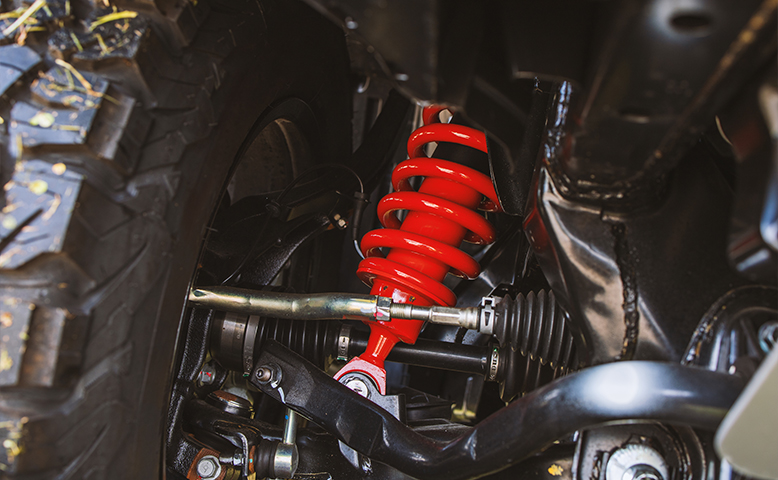
Your suspension does more than smooth bumps. It keeps your tires pressed on the road so you can steer, brake, and turn with control. Springs hold the vehicle up, while shocks or struts slow spring movement so the body doesn’t keep bouncing. When parts wear, the car can feel fine at low speed but turn risky fast on wet roads or during a sudden stop.
Tires lose grip sooner in turns.
Braking can feel less steady.
Small noises can signal loose parts.
Catching these signs early can save tires and prevent other parts from wearing out.
Nose Dive While Braking
If the front end dips hard when you brake, your dampers may be weak. During braking, the weight shifts forward. Healthy shocks/struts control that shift so the nose doesn’t drop too far or too fast. Too much dive can also stress front brakes and make the rear feel light, which can trigger early ABS action on rough roads. Try a safe test in an empty lot at low speed and notice how the body moves.
Front-end drops more than it used to
Steering feels light for a moment
The car takes longer to “settle” after the stop
If you feel repeated pitching, it’s time for an inspection of struts, mounts, and control arm bushings.
Extra Bounce After Bumps
A common clue is bouncing more than once after a bump. Springs store energy; shocks are meant to turn that motion into heat inside the damper oil. When a shock is worn, the spring keeps moving, and the tire can skip over the road. That can reduce grip, especially on washboard pavement.
One rise and one settle is normal
Two or more extra bounces suggest weak damping
A “floaty” feel at highway speed is a red flag
Worn dampers can also speed up tire wear because the tire keeps hopping instead of rolling smoothly.
Pulling or Wandering Steering
If you correct the wheel to stay in your lane, don’t blame the wind right away. Toe, camber, and caster are set in small amounts, often fractions of a degree, and changes matter. A worn tie rod end or control arm bushing can shift under load and make the car drift.
The car pulls more when braking or after bumps
Steering feels “loose” around the center
It tracks worse on uneven pavement
This can be tiring and can hide other handling changes. A shop can check play in joints and measure alignment to see if parts are holding their settings.
Clunks, Knocks, and Rattles
Suspension noise is often a warning, not just an annoyance. Clunks can come from worn sway bar links, loose strut mounts, failing ball joints, or cracked bushings. A ball joint supports the steering knuckle; if it gets loose, the wheel can shift and change direction. Many noises show up at low speeds over potholes, speed bumps, or when turning into a driveway.
A single “clunk” on bumps can mean a loose link or mount
Repeating a knock while turning can point to a joint or bushing
Metal-on-metal sounds need quick attention
Have the car lifted and checked. Finding a loose fastener early can prevent damage to control arms and tires.
Uneven or Cupped Tires
Your tires are a report card for your suspension. If shocks are weak or alignment is off, tires can wear in odd patterns. “Cupping” looks like small dips around the tread, and it often comes with a humming sound that rises with speed. Check tread depth with a simple gauge. Remember: in many places, 2/32 inch is the legal minimum, but grip in raindrops well before that.
Inside or outside edge wear can signal camber issues
Feathering can point to toe problems
Cupping often links to weak dampers or worn bushings
If you replace tires without fixing the cause, the new set can wear out far sooner than expected.
Leaking Shocks or Struts
Shocks and struts are sealed units filled with oil (and sometimes gas). A light film of dirt can be normal, but wet oil streaks on the body of the shock usually mean the seal is failing. When oil leaks out, damping drops, and the ride can get bouncy or harsh at the same time. Look behind the wheel with a flashlight.
Wet, oily lines on the strut tube
Oil was sprayed onto nearby parts
Uneven ride side to side
Leaks often show up after many miles; many vehicles start to lose damper control around 50,000 miles, though driving conditions can shorten that. If one side leaks, inspect the other side too.
Vibration and Shaky Ride
Not all vibration is tire balance. If the steering wheel shakes over bumps or the car feels like it shudders on rough roads, worn suspension parts may be letting the wheel move where it shouldn’t. Bad strut mounts can transmit vibration into the body. Worn bushings can let a control arm shift back and forth, changing toe as the wheel hits a bump and adding steering shake.
Shaking is worse on rough pavement than on smooth pavement
The wheel feels “nervous” in your hands
Vibration changes when you brake or turn
A tech can check for play with a pry bar and inspect mounts, bushings, and bearings to find the true cause.
Sagging Ride Height
Springs can weaken or break, and that changes ride height. A sagging corner can cause poor alignment, headlight aim problems, and bottoming out over bumps. A difference of about 1 inch or more side-to-side is worth checking. Also consider load: hauling heavy items too often can stress springs and speed up sag.
One corner sits lower than the others
Car scrapes more on driveways
Rear squats when you accelerate
You may also notice headlights pointing lower at night. A broken spring can be hard to spot without lifting the car, since the break often happens near the end coil.
When Alignment Won’t Hold
If you just got an alignment and the car still feels off, the issue may be worn parts that won’t keep the angles set. Alignment machines can put toe and camber “in spec,” but if a bushing is soft or a ball joint is loose, the angles change as soon as you drive. You may also notice the steering wheel goes off-center again quickly.
Repeated alignments in a short time
New tires start wearing unevenly within a few thousand miles
Clunks or play found during alignment checks
Ask for a full suspension inspection before another alignment. Fixing worn parts first makes the alignment last and protects your tires.
Fix It Before It’s Risky
Suspension problems rarely show up all at once. They build through small clues: extra bounce, a pull on braking, a new clunk, or tires that wear in a strange pattern. Taking action early makes your car easier to control during a quick lane change or a hard stop in the rain.
Request a road test plus a lift inspection
Ask for measurements: tread depth, ride height, and alignment
Replace parts in pairs when advised
Book your check with Same Day Auto Repair.